New Circuit Work Done Right in Salt Lake
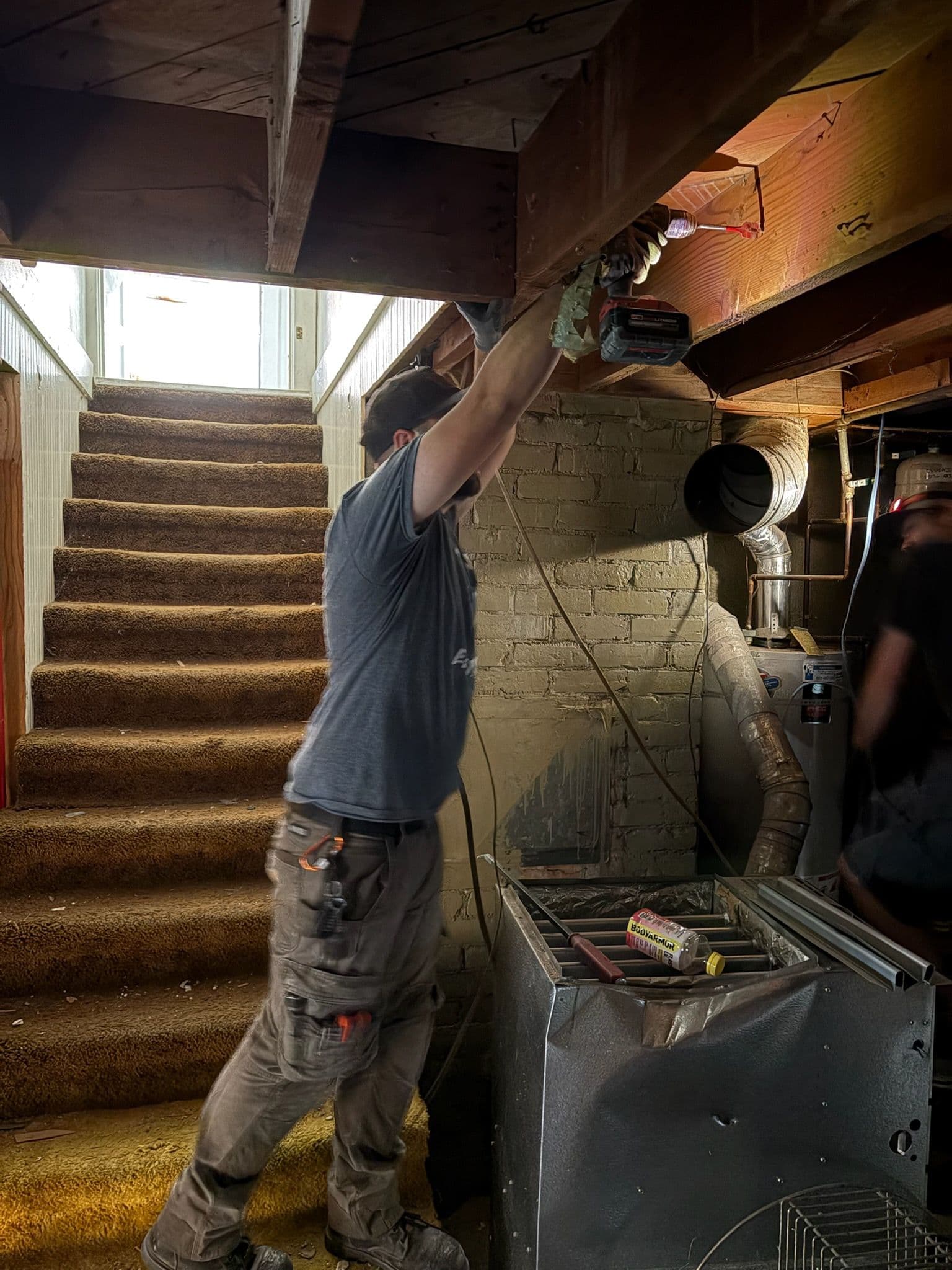
Most of the electrical work that actually matters happens where nobody looks. Behind the drywall. Up in the joists. Down in the basement. That's where we spend a lot of our time, and it's exactly where cutting corners causes real problems down the road.
Here's what we were working with - an older home in Salt Lake that needed new circuits run properly through the existing framing. That means getting into tight spaces, routing wire through decades-old lumber, and making sure every connection is clean and correct before anything gets closed back up. It's not glamorous work, but it's the kind of work that determines whether your electrical system is safe for the next 30 years or just looks fine on the surface.
A lot of homeowners don't realize how much prep goes into new circuit installation. Before a single breaker gets switched on, the groundwork has to be solid. Wire routing, proper stapling, clean runs through the framing - all of it has to be done right the first time. That's true whether we're adding a circuit for a new appliance, upgrading capacity in an older home, or doing a more involved electrical remodeling job.
What we do is pretty straightforward - we treat the work behind the walls the same way we'd treat anything a homeowner can see. Because eventually, someone is going to see it. Whether that's a future inspector, a contractor opening up a wall, or the next electrician who works on the house. We want that work to hold up.
Salt Lake homes - especially the older ones - often have electrical systems that were never designed for modern loads. Adding circuits the right way means your home is ready for what's actually plugged into it today, not what someone planned for 50 years ago.